Does Pepsi Max Have Caffeine
March 5, 2026


So, the big question: does Pepsi Max have caffeine in it? The short answer is yes, it does. If you’re looking for a bit of a pick-me-up from your fizzy drink, Pepsi Max will give you that. It’s not just empty calories and sugar-free sweetness; there’s a dose of caffeine in there to get you going.
Now, you might be wondering how much caffeine we’re talking about. It’s not a massive amount, especially when you compare it to things like coffee or energy drinks. The “Max” in Pepsi Max actually refers to maximum taste, not maximum caffeine. So, while it’s got caffeine, it’s not designed to be a super-charged energy drink. Think of it more as a standard soft drink with a little something extra. For reference, a typical serving of Pepsi Max has around 41.6 milligrams of caffeine. This is pretty comparable to a standard cup of coffee, which usually falls between 40 and 80 milligrams. So, if you’re used to your morning coffee, the caffeine hit from a Pepsi Max is likely to feel familiar, though perhaps a bit milder. It’s definitely less than what you’d find in a strong espresso or a big energy drink, which can pack hundreds of milligrams. So, yes, it has caffeine, but it’s generally considered a moderate amount for a soft drink.
So, you’re wondering about the caffeine kick in Pepsi Max, eh? It’s a fair question, especially if you’re trying to keep track of your intake or just curious about what’s in your drink. Let’s break down how much caffeine does Pepsi Max have, because it can vary a bit depending on the size of the can or bottle you’re grabbing.
If you’re downing a standard 330ml can of Pepsi Max, you’re looking at around 42.6 milligrams of caffeine. That’s a pretty common size, especially if you’re grabbing one from a shop or a vending machine.
Sometimes you might find a slightly larger 375ml can. For this size, the caffeine content will naturally be a bit higher. While exact figures can fluctuate slightly, it’ll be proportionally more than the 330ml can, so expect it to be around 46-47 milligrams.
Going for a 600ml bottle? That’s a decent amount of Pepsi Max! You’ll be getting roughly 60-65 milligrams of caffeine in one of these larger bottles. It’s a good option if you need a bit more of a lift throughout the afternoon.
And for the really thirsty or those planning to share (or not!), the 1-litre bottle packs the most punch. You’re looking at around 100-110 milligrams of caffeine in a full litre of Pepsi Max. That’s quite a bit, so keep that in mind if you’re sensitive to caffeine.
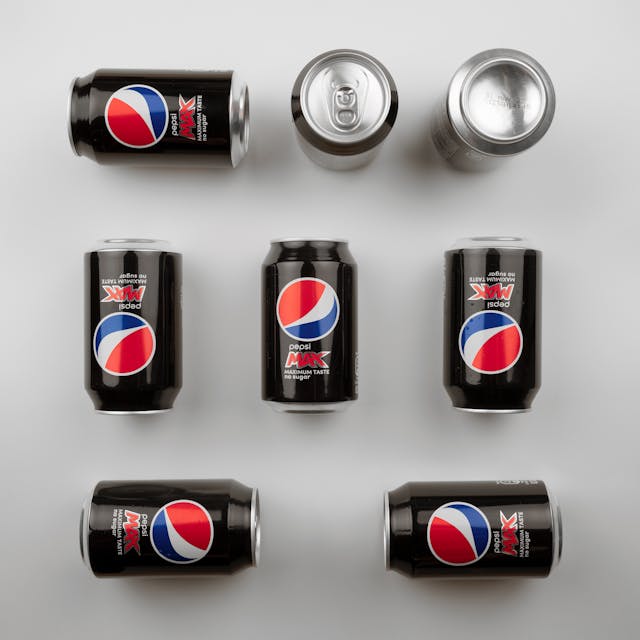
It’s interesting to see how the caffeine adds up across different sizes. While Pepsi Max isn’t an energy drink, it does have a noticeable amount of caffeine to give you that little bit of a boost.
So, why exactly does Pepsi Max have caffeine? It’s not just for kicks, though that little buzz is definitely part of the appeal for many. Back in the day, when soft drinks were first being invented, the idea wasn’t necessarily to give people a jolt of energy. Think about it – people were looking for alternatives to the alcoholic drinks that were common. Coca-Cola, for instance, originally used kola nuts, which naturally contain caffeine. It just sort of became a thing.
Nowadays, most soft drink companies, including Pepsi, add caffeine directly to their drinks. It’s not always about using ingredients that already have it. For Pepsi Max, the ‘Max’ in the name actually refers to ‘maximum taste’, not maximum caffeine. While it does have caffeine, it’s not an energy drink in the same way some other beverages are. It’s more about giving that familiar, slightly stimulating lift that many people associate with colas. It’s a bit of a balancing act, really – enough to give you that familiar cola kick, but not so much that it’s overwhelming. It’s just part of the classic cola flavour profile that people know and love.
So, you’re wondering if Pepsi Max packs more of a caffeine punch than your standard Pepsi? It’s a fair question, especially if you’re trying to keep an eye on your intake. Let’s break it down.
Generally speaking, yes, Pepsi Max does have more caffeine than regular Pepsi. It’s designed to offer a bit more of a kick, hence the ‘Max’ in its name, though it’s important to remember that ‘Max’ refers to taste, not necessarily the caffeine level being the absolute highest possible.
Here’s a rough comparison for a standard 330ml can:
So, while it’s not a massive difference, Pepsi Max does edge out regular Pepsi in the caffeine department. It’s still significantly less than what you’d find in a cup of coffee, so it’s not going to send you into orbit, but it’s definitely a noticeable step up from the regular version. If you’re looking for a bit more of a lift without going for an energy drink, Pepsi Max might be your go-to. It’s interesting how these small differences can add up, much like how the Australian Age Pension is adjusted periodically to keep pace with living costs.
Alright, let’s talk caffeine. You’re probably wondering how that Pepsi Max stacks up against your morning cuppa, right? It’s a fair question, especially if you’re looking for a bit of a kick.
When you compare Pepsi Max to a standard cup of brewed coffee, it’s actually pretty similar in terms of caffeine. A typical 330ml can of Pepsi Max has around 42.6mg of caffeine. Now, a regular cup of coffee, say about 240ml (that’s roughly 8 ounces), can have anywhere from 40mg to a whopping 80mg. So, a Pepsi Max is definitely on the lower end of that coffee spectrum, or even right in the middle if you’re drinking a weaker brew.
Here’s a quick look:
| Drink | Serving Size | Caffeine (approx.) |
| Pepsi Max | 330ml can | 42.6mg |
| Brewed Coffee | 240ml (8oz) | 40-80mg |
But, and this is a big ‘but’, things change dramatically when you look at other coffee drinks. Think about your fancy lattes or strong espressos. A single shot of espresso can pack around 64mg of caffeine, and a larger latte or cappuccino can easily hit 150mg to 250mg. Suddenly, that Pepsi Max seems pretty tame!
So, while Pepsi Max offers a bit of caffeine, it’s not really in the same league as a strong coffee, especially those milk-based espresso drinks. It’s more of a gentle nudge than a full-on jolt. If you’re after a serious caffeine hit, coffee is usually the way to go. Pepsi Max is more of a middle-ground option compared to other soft drinks and a lighter coffee.
So, you’re wondering if Pepsi Max is the same caffeine-wise no matter where you grab a can or bottle? It’s a fair question, and the answer is… mostly yes, but with a few quirks.
Globally, Pepsi Max is generally formulated to have a consistent caffeine kick. In places like the UK, Australia, and other markets outside the US, you’ll find it has a similar caffeine level to what you might expect. For instance, a 330ml can often packs around 42.6 milligrams of caffeine. This is pretty standard for a soft drink and aligns with what many people associate with Pepsi Max.
However, it gets a bit tricky when you look at the US market. Over there, Pepsi Max was actually rebranded as Pepsi Zero Sugar quite a while back. While the intention was to keep the taste and caffeine profile similar, there can sometimes be slight variations in how these drinks are formulated across different regions. Some sources suggest that Pepsi Zero Sugar in the US might have a different caffeine amount compared to the Pepsi Max you’d find elsewhere. For example, one report mentions 38 mg of caffeine in a 12 oz can of Pepsi Zero Sugar, which is a bit lower than the 42.6 mg often cited for Pepsi Max in other countries. It’s not a massive difference, but it’s there.
It’s also worth remembering that the caffeine content can vary slightly even within the same product depending on the serving size. A bigger bottle will naturally have more caffeine than a small can. So, while the type of drink (Pepsi Max or its US equivalent) is the main factor, the amount you’re drinking definitely plays a role in your total caffeine intake. If you’re really keen on knowing the exact amount, checking the nutrition information on the packaging is always your best bet, though this can sometimes be a bit of a treasure hunt!
Alright, so you’re wondering if there’s a Pepsi Max out there that’s completely caffeine-free, right? It’s a fair question, especially if you’re trying to cut back on the caffeine or just want a fizzy drink without the buzz.
Here’s the lowdown: As of now, Pepsi Max itself isn’t really sold as a caffeine-free option. The ‘Max’ in the name actually refers to ‘maximum taste’, not maximum caffeine, which can be a bit confusing. So, if you’re grabbing a standard Pepsi Max, you’re definitely getting caffeine.
However, this doesn’t mean you’re out of luck if you want a zero-sugar, zero-calorie Pepsi that’s caffeine-free. While it might not be called ‘Pepsi Max’, other Pepsi products might fit the bill. For instance, some regions might offer a specific caffeine-free version of their zero-sugar cola, or you might find that other Pepsi variants, like a standard Diet Pepsi in certain sizes or markets, have very low or no caffeine. It’s always worth checking the label carefully, as formulations can change and vary quite a bit depending on where you are in the world.
It’s a bit like trying to find a specific coin; sometimes the rarer versions, like the ‘C’ mintmark $2 Red Poppy coin, are hard to track down because of their limited mintage. Similarly, a truly caffeine-free Pepsi Max isn’t a common find, but related options might exist if you look closely at the Pepsi product range.
When you’re grabbing a bottle of Pepsi Max, you might wonder if the caffeine in it is actually safe to drink. The answer is yes — for most healthy adults, moderate caffeine intake from soft drinks, like Pepsi Max, isn’t anything to worry about.
Here’s a quick overview of what most health authorities in Australia and around the world recommend:
| Group | Recommended Max Daily Caffeine Intake |
| Healthy adults | 400 mg |
| Pregnant/breastfeeding | 200 mg |
| Children (5–12 years) | ~3 mg per kg body weight |
Let’s put that into context. One regular 330ml can of Pepsi Max has around 42 mg of caffeine. That means you’d have to drink about 9 cans in a day to even come close to the limit for healthy adults, and most folks aren’t drinking that much soft drink.
A few things to keep in mind:
Drinking one or two cans a day isn’t going to send you to the hospital, but it’s best not to make a habit of guzzling soft drinks all day, every day. Besides caffeine, there’s other stuff in them you might not want too much of. If you notice you’re feeling weird after drinking Pepsi Max (wired, racing heart, can’t sleep), maybe cut back. And yes, caffeine can be a bit habit-forming, so quit slowly if you ever want to stop altogether.
Yes, Pepsi Max contains caffeine. Despite being sugar-free, it’s still got a hit of caffeine, just like regular colas. The caffeine is added for both flavour and the slight energy boost you expect from similar soft drinks.
A standard 330ml can of Pepsi Max usually has around 42.6 milligrams of caffeine. It’s a bit more than regular Pepsi, but still less than a strong cup of coffee.
It depends what you mean by “stronger.” If you’re just looking at caffeine, Pepsi Max and Coca-Cola Zero Sugar run in the same range, but Pepsi Max can be a touch higher in some sizes. For example, a 375ml can of Pepsi Max is close to 47mg, while Coke Zero is a bit lower, usually around 36mg for the same size. Taste can be subjective—some find Pepsi Max has a punchier flavour, but it’s down to personal preference.
Children can physically drink Pepsi Max, but it’s not really recommended. Even though there’s no sugar, the caffeine and other additives can affect kids more than adults. The Australian Health Department suggests energy drinks and high-caffeine sodas aren’t a great fit for young kids. If your child has one every once in a while, it’s probably fine, but it’s best as an occasional treat rather than an everyday drink.
For most healthy adults, having up to 400mg of caffeine a day is considered safe. This means you could probably have a few cans of Pepsi Max, but it’s always best to listen to your body and not overdo it, especially if you’re sensitive to caffeine.