How Many Fortnights in a Year
December 29, 2025

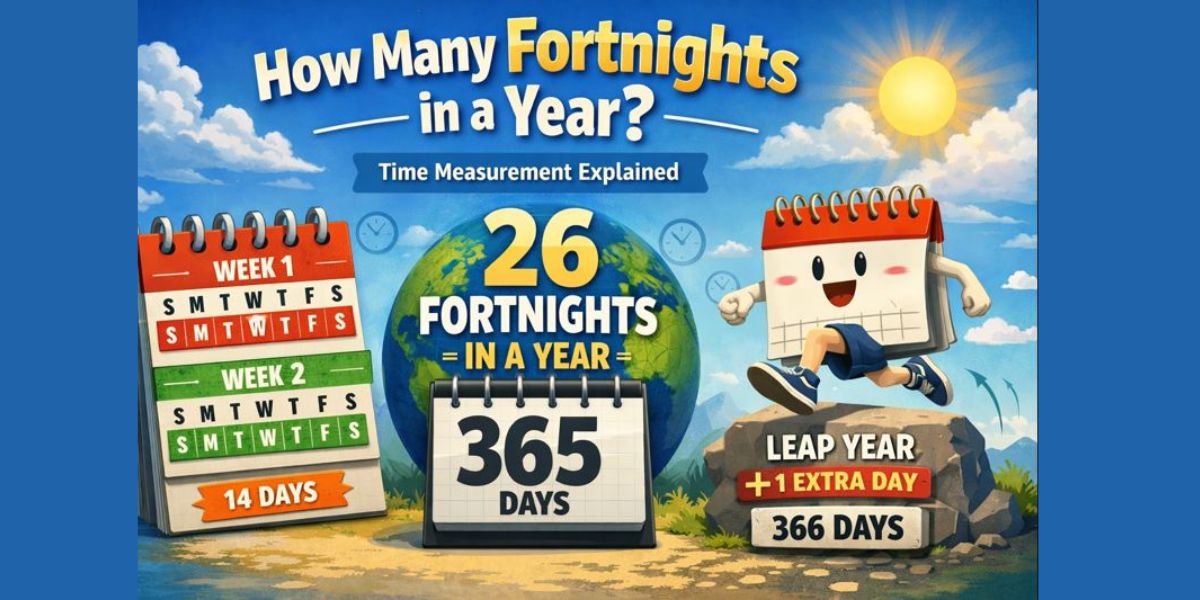
Ever wondered how many fortnights are actually in a year? It sounds like a simple question, but the answer can be a bit more interesting than you might think. We use fortnights for all sorts of things, from pay cycles to rent payments, so knowing how they stack up against a full year is pretty handy. Let’s break down this unit of time and figure out exactly how many fortnights fit into 365 days, and why it’s not always a straightforward number.
Right then, let’s get down to basics. When we talk about a fortnight, we’re really just talking about a period of time that most of us are pretty familiar with, even if we don’t use the word every day. A fortnight is simply a span of 14 days. That’s it. It’s also the same as two weeks.
The word itself comes from Old English, something like “fēowertīene niht”, which basically means “fourteen nights”. Back in the day, people often counted time by nights rather than days, which is a bit different to how we do things now. It’s a bit like how we might say “see you in a week” or “I’ll be back in a fortnight” – it’s just a way to mark out a chunk of time.
Here’s a quick breakdown:
While we often use weeks or months for everyday planning, the fortnight pops up more than you might think, especially in certain industries. It’s a handy way to divide up longer periods into manageable chunks. You might hear it used for things like payroll cycles or rent payments, which often fall into these two-week patterns.
It’s interesting to think about how different cultures have measured time. While ‘fortnight’ is common in English, other languages have their own terms or simply use ‘two weeks’. Some even use terms that translate to ‘fifteen days’, often counting inclusively from the start to the end of the period.
So, next time you hear ‘fortnight’, just picture two full weeks. Easy as that.

So, you’re wondering how many fortnights are actually in a year? It’s a pretty straightforward question, and the answer is simpler than you might think.
A standard year has 52 weeks, and since a fortnight is two weeks, there are 26 fortnights in a year.
Think of it this way:
It’s a handy way to break down the year, especially if you’re dealing with things like pay cycles or billing. It just makes things a bit easier to track when you’re not thinking in terms of 52 individual weeks.
While we often talk about a year having 365 days, when we’re measuring time in fortnights, we’re really just looking at how many two-week chunks fit into that period. It’s a more practical way to divide the year for certain purposes.
This simple calculation holds for most years, but we’ll get into the nitty-gritty of leap years a bit later. For now, just remember that 26 is your go-to number for the number of fortnights in a year.
So, we know a fortnight is just a fancy word for two weeks, which adds up to 14 days. Pretty straightforward, right? Now, let’s figure out how many of these 14-day chunks fit into a regular, non-leap year. A standard year, the kind we have most of the time, clocks in at 365 days.
To find out how many fortnights are in 365 days, we just need to do a bit of simple division. We take the total number of days in the year and divide it by the number of days in a fortnight.
Here’s the breakdown:
So, the calculation looks like this: 365 days / 14 days per fortnight.
When you crunch those numbers, you get approximately 26.07 fortnights.
This means that a standard year isn’t made up of a perfect, whole number of fortnights. There’s a little bit left over, a bit of time that doesn’t quite make up a full 14-day period.
It’s interesting to see how these time units don’t always line up perfectly. We’re used to thinking in weeks and months, but when you break it down into fortnights, you see those slight discrepancies. It’s not a huge deal for most things, but it’s good to know if you’re dealing with things like payroll or billing cycles that might be based on fortnightly payments.
Right, so we’ve talked about a regular year, but what happens when February decides to throw in an extra day? That’s right, we’re talking about leap years. These happen every four years, giving us a nice, round 366 days instead of the usual 365.
So, how does this extra day affect our fortnights? Well, a fortnight is always 14 days, no matter what kind of year it is. The maths is pretty straightforward, really.
To figure out the number of fortnights in a leap year, you just divide the total number of days by 14:
366 days / 14 days/fortnight = 26.14 fortnights (approximately).
So, a leap year contains just over 26 fortnights. It’s not a whole number, which is why we often round or talk about it in terms of fractions of a fortnight.
It’s interesting to note that while the extra day in a leap year doesn’t add a whole new fortnight, it does shift things slightly. If you’re on a fortnightly pay cycle, that extra day means your pay cycle might end up a little bit out of sync with the calendar year compared to a non-leap year. It’s a small detail, but it can matter for things like payroll or billing.
It’s not a huge difference, just a little bit more time to fit those 14-day chunks into. Makes you think about how we measure time, doesn’t it?
So, you want to get down to the nitty-gritty of how many fortnights actually fit into a year? It’s not as complicated as it sounds, really. We just need a couple of basic facts.
A fortnight, as we’ve established, is simply two weeks, which equals 14 days. A standard year has 365 days, and a leap year has 366. Easy enough, right?
To figure out the number of fortnights in a year, you just need to divide the total number of days in the year by the number of days in a fortnight.
Here’s the formula:
Number of Fortnights = Total Days in Year / Days in a Fortnight
Since a fortnight is 14 days, the formula becomes:
Number of Fortnights = Total Days in Year / 14
Let’s break it down:
See? It’s pretty straightforward math. You’re essentially seeing how many 14-day chunks fit into the year’s total days. It’s a neat way to think about time, especially when you’re dealing with things like payroll cycles.
It’s important to remember that these are average figures. Because a year isn’t a perfect multiple of 14 days, you’ll always end up with a bit of a remainder. This is why you’ll sometimes hear about 26 fortnights and a bit, rather than a neat whole number.
Here’s a quick look at how it works out:
| Year Type | Days in Year | Calculation | Number of Fortnights |
| Standard Year | 365 | 365 / 14 | 26.07 |
| Leap Year | 366 | 366 / 14 | 26.14 |
So, while we often say there are ‘about’ 26 fortnights in a year, the precise mathematical answer involves a decimal. It’s a good reminder that time doesn’t always divide up perfectly into neat little boxes!
You might think calculating fortnights in a year is straightforward, right? Fourteen days make a fortnight, and there are 365 days in a regular year, so 365 divided by 14 should give you a nice, neat number. But, as with most things involving time and calendars, it’s not quite that simple.
The main culprit is the leap year. Every four years, we add an extra day to February, making the year 366 days long. This extra day throws off the neat calculation. So, while a standard year has 52 weeks and 1 day, a leap year has 52 weeks and 2 days. This means the number of fortnights isn’t a fixed, constant figure year after year.
Here’s a quick breakdown:
See? It’s not a whole number. This slight variation is why you won’t find a perfectly round figure for fortnights in a year. It’s a subtle difference, but it’s there, all thanks to how we keep our calendar aligned with the Earth’s orbit.
This slight inconsistency is why some systems, like payroll, might have a year where you receive 27 pay periods instead of the usual 26. It’s not magic; it’s just the calendar doing its thing.
It’s a bit like trying to fit square pegs into round holes sometimes. The 14-day fortnight is a neat unit, but the Earth’s journey around the sun doesn’t divide perfectly into 14-day chunks. We’ve got these extra bits of days that accumulate, leading to leap years and those slightly wonky fortnight counts.
So, we know a fortnight is basically two weeks, right? That makes figuring out how many fortnights in a year a bit easier when you think about it in terms of weeks. A standard year has 52 weeks. Since a fortnight is two weeks, you can just divide 52 by 2. That gives you 26 fortnights in a regular year. Pretty straightforward.
But what about months? Months are a bit trickier because they aren’t all the same length. Some have 30 days, some 31, and February throws a spanner in the works with 28 or 29. On average, a month has about 4.3 weeks. If you do the maths, that means there are roughly 2.15 fortnights in an average month. See? It gets a bit messy when you try to fit those neat 14-day blocks into the more fluid month structure.
Here’s a quick rundown:
It really highlights how different time units line up (or don’t!).
| Time Unit | Days (approx.) | Fortnights (approx.) |
| Week | 7 | 0.5 |
| Fortnight | 14 | 1 |
| Month | 30.4 | 2.15 |
| Year | 365.25 | 26 |
When we talk about how many fortnights in a year, it’s always 26, whether it’s a leap year or not. This is because we’re just counting full 14-day periods. The extra day in a leap year doesn’t create a whole new fortnight; it just gets absorbed into the last one, making it slightly longer, or it’s just an extra day at the end of the year. The core calculation of how many fortnights in a year remains consistent based on the 52 weeks we have.
So, while months can be a bit of a headache to compare directly, the relationship between weeks and fortnights is super simple. It’s all about those neat 14-day chunks, which makes calculating how many fortnights in a year a breeze once you get the hang of it. You’ll find this consistent number of how many fortnights in a year is really useful, especially when you’re looking at things like pay cycles or billing. It’s just a more structured way to think about longer periods than weeks, but not as variable as months. Understanding how many fortnights in a year helps make sense of these different time frames.
You know, it’s funny how we measure time. We’ve got weeks, months, and then there’s the fortnight. While it might sound a bit old-fashioned, the fortnight is actually still pretty common, especially when it comes to how people get paid or how bills are structured. It’s basically just a two-week period, so 14 days. Simple enough, right?
Many businesses, particularly in Australia and the UK, use fortnightly pay cycles. This means employees receive their wages every two weeks. It’s a popular choice because it falls neatly between weekly and monthly payments, offering a good balance for both the employer and the employee.
Here’s a quick look at how it often plays out:
It’s not just about getting paid, though. This rhythm helps people plan their finances. Knowing you’ve got a payday coming up every two weeks can make it easier to save or just manage your day-to-day spending.
The fortnight, a period of 14 days, offers a consistent and predictable rhythm for financial transactions. Its use in payroll and billing cycles simplifies budgeting for many individuals and businesses alike, providing a middle ground between more frequent and less frequent payment schedules.
So, while you might not hear the word ‘fortnight’ every day, its influence is definitely felt in the way many of us manage our money and our commitments.
When it comes to getting paid, especially if you’re on an hourly wage or a contract, the idea of a fortnight pops up quite a bit. It’s a pretty common way for businesses to handle payroll, and honestly, it makes a lot of sense for budgeting.
Most commonly, a year works out to have 26 fortnights when it comes to salary and wage payments. This is because a fortnight is just two weeks, and there are 52 weeks in a standard year. So, 52 weeks divided by 2 weeks per fortnight gives you 26. Simple enough, right?
This means that if you’re paid fortnightly, you’ll receive 26 paychecks throughout the year. It’s a bit different from being paid monthly, where you might only get 12 paychecks, or even bi-weekly (twice a month), which usually results in 24 paychecks. The biweekly payment schedule is often confused with fortnightly, but fortnightly means every two weeks, not twice a week.
Here’s a quick rundown of how it usually shakes out:
So, if your employer pays you every two weeks, you’re on a fortnightly schedule. It’s a pretty regular rhythm that many people find easy to manage their personal finances around. You get paid more often than monthly, which can be a big help for covering bills and everyday expenses.
While the maths seems straightforward, sometimes the exact number of fortnights can feel a bit off. This usually happens around public holidays or if your pay cycle doesn’t perfectly align with the start of the year. But for the most part, think 26 pay packets.
It’s a system that offers a good balance – more frequent than monthly, but perhaps a little less frequent than some bi-weekly arrangements. It’s all about finding what works best for both the employer and the employees, and for many, the 26-fortnight cycle hits that sweet spot.
Right then, let’s clear up a bit of confusion that pops up pretty often when we’re talking about time periods. You’ve got ‘fortnight’ and ‘biweekly’, and while they sound like they might mean the same thing, there’s a subtle difference, especially when you’re dealing with things like pay cycles or subscriptions.
A fortnight is always, without question, a period of 14 days. It comes from the Old English ‘fēowertīene niht’, which literally means ‘fourteen nights’. So, it’s a fixed, solid two-week block.
‘Biweekly’, on the other hand, can be a bit trickier. It generally means ‘twice a week’ or ‘every two weeks’. This is where the confusion starts. If something is biweekly, it could happen on a Monday and a Thursday, or it could happen every other Monday. The ‘every two weeks’ meaning is the one that lines up with a fortnight.
Here’s a quick rundown:
So, while a fortnight is a specific type of biweekly period (the ‘every two weeks’ kind), not all biweekly events are fortnights. Think of it like this: all squares are rectangles, but not all rectangles are squares. All fortnights are biweekly (in the ‘every two weeks’ sense), but not all biweekly things are fortnights.
When you see ‘biweekly’ in a contract or on a bill, it’s always a good idea to check exactly what they mean. Is it twice a week, or once every two weeks? If it’s the latter, then yes, it’s the same as a fortnight. If it’s the former, well, that’s a whole different kettle of fish!
The key takeaway here is that ‘fortnight’ is a precise term for 14 days, whereas ‘biweekly’ can be a bit more ambiguous and requires clarification to avoid misunderstandings, especially in financial or scheduling contexts.

So, we’ve figured out that a year has roughly 26 fortnights. But what does that actually look like in the real world? It’s not just some abstract number; it pops up in a few places you might not even realise.
Think about your pay cycle. Many jobs, especially in Australia, pay people every two weeks. That’s a fortnight! So, if you’re getting paid fortnightly, you’re likely getting paid about 26 times a year. This bi-weekly pay structure is super common and makes budgeting a bit easier for a lot of folks.
Rent is another big one. While some landlords might ask for monthly rent, others, particularly for things like student accommodation or certain rental agreements, might deal in fortnightly payments. It just breaks down the cost into smaller, more manageable chunks.
Here’s a quick rundown of where you might see fortnights in action:
It’s interesting to see how this two-week block of time fits into our lives. It’s a bit longer than a week, but shorter than a month, making it a handy middle ground for regular financial and administrative tasks.
The concept of a fortnight, or fourteen nights, has historical roots and continues to be a practical unit for organising regular payments and schedules. It offers a rhythm that’s more frequent than monthly but less demanding than weekly, fitting neatly into many financial and organisational frameworks.
Ever wondered how many fortnights are in a year? It’s a simple question, but the answer helps us understand time better. We’ve broken down the maths for you in our latest article, “11. Practical Examples of How Many Fortnights in a Year“. It’s easier than you think! Want to dive deeper into other time-related puzzles or need more insights? Visit our website for all the answers.
A fortnight is simply a period of two weeks. Think of it as 14 days all rolled into one. The word comes from Old English and literally means ‘fourteen nights’.
Generally, there are about 26 fortnights in a year. Since a year has 365 days and a fortnight is 14 days, you can divide 365 by 14 to get roughly 26.07 fortnights.
Yes, a little bit! A leap year has 366 days. If you divide 366 by 14, you get about 26.14 fortnights. So, there’s just a tiny bit more than 26 fortnights in a leap year.
It’s because a year isn’t perfectly divisible by 14. A standard year has 365 days, and 365 divided by 14 leaves a remainder. This means you can’t fit exactly 26 full fortnights into a year without a little bit of time left over.
Pretty much! Bi-weekly means every two weeks, which is exactly what a fortnight is. So, if your pay is bi-weekly, you get paid about 26 times a year, which lines up with the number of fortnights in a year.
You’ll often hear ‘fortnight’ used for things like rent payments, payroll cycles, or billing periods. It’s a handy way to talk about a two-week timeframe for regular arrangements.
A fortnight is always 14 days, or two weeks. Months are a bit trickier, as they can have 28, 29, 30, or 31 days. So, a fortnight is always shorter than most months, except for February in a non-leap year.
Sure! Imagine your rent is due every fortnight. If you pay on January 1st, your next payment would be around January 15th, and then again around January 29th. You’d end up making about 26 rent payments in a regular year.


