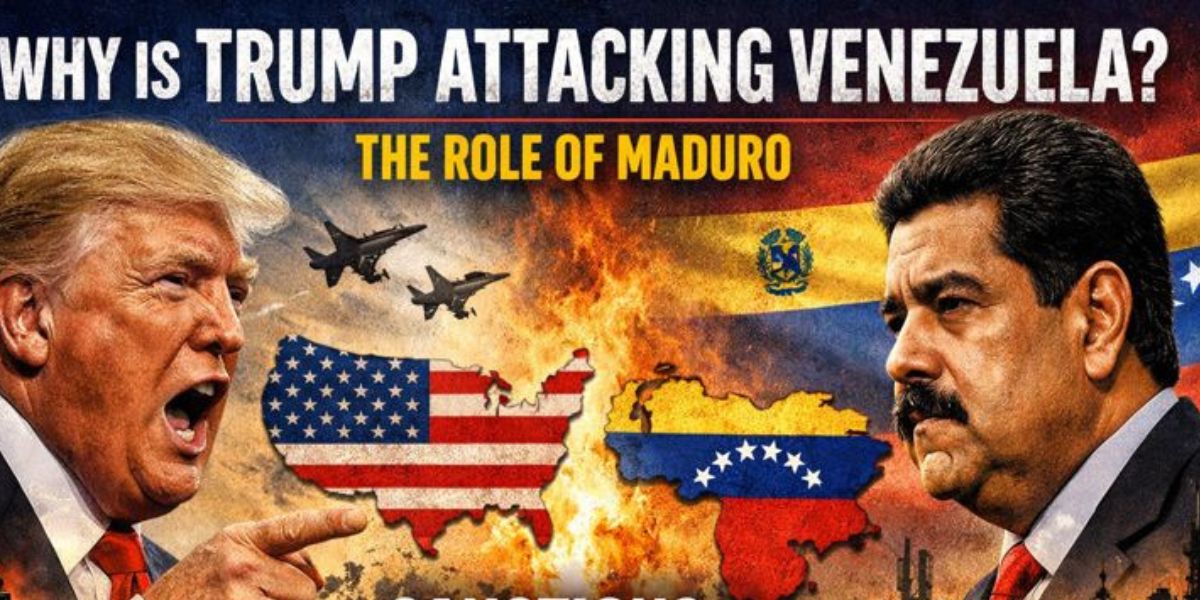
Trump Pressure On Maduro Venezuela
January 8, 2026


So, what’s the deal with all the pressure Trump put on Maduro in Venezuela, especially concerning oil? It’s a complicated story, really. We’re talking about years of history, a lot of political back-and-forth, and of course, a whole lot of oil. This situation wasn’t just about politics; it had a significant ripple effect on energy markets and the people of Venezuela. Let’s break down how all this played out and how Trump pressure on Maduro Venezuela.
The United States, under the Trump administration, took a series of actions aimed at pressuring the government of Nicolás Maduro in Venezuela, with a significant focus on the country’s oil and energy sector. This wasn’t just about politics; it was deeply tied to the global flow of oil and the economic stability of both nations. Venezuela, once a major oil supplier to the U.S., saw its production plummet under Maduro due to a mix of poor management, sanctions, and international isolation. The Trump administration’s strategy involved a multi-pronged approach, including sanctions, asset freezes, and even naval blockades, all designed to cripple Maduro’s ability to fund his regime and to push for a change in leadership.
Here’s a quick look at the core elements:
The interplay between U.S. policy, Venezuelan oil production, and global energy markets became a central theme. Disruptions in Venezuela’s output had ripple effects, influencing prices and supply chains for heavy crude, particularly impacting U.S. refiners. The administration’s actions signaled a willingness to use economic and military pressure to achieve foreign policy objectives, especially concerning vital energy resources.
This period saw a dramatic shift in U.S.-Venezuela relations, moving from a long-standing, albeit sometimes strained, oil trade partnership to confrontation. The consequences were felt not only in the boardrooms of energy companies but also on the streets of Venezuela, contributing to an ongoing humanitarian crisis.
For a long time, the United States and Venezuela had a close relationship when it came to oil. Venezuela has always had massive oil reserves, some of the biggest in the world, and the U.S. was a major buyer. Think about it: Venezuela is right next door to the U.S. Gulf Coast, making shipping easy and cheap. This connection really took off in the 1990s when Venezuela opened up its oil industry to foreign investment. U.S. oil companies, along with others from Europe, jumped in, helping to boost Venezuela’s oil production to impressive levels, hitting a peak of around 3.5 million barrels per day.
Back then, Venezuela was a steady supplier for the U.S., sending over 800,000 barrels daily. It was a win-win: Venezuela got cash and investment, and the U.S. got a reliable source of energy. This partnership was a big deal for both economies.
However, things started to change. Under the Maduro administration, the oil industry faced serious problems. Mismanagement, taking over oil assets, not paying debts, and just general bad practices led to a huge drop in production. It wasn’t just the internal issues; external factors like sanctions also played a role. By the time Trump’s pressure ramped up, production had already fallen significantly, to about 1 million barrels per day, and exports to the U.S. had shrunk to around 120,000 barrels per day.
The deep reliance on oil revenue meant that any disruption to the industry had a massive ripple effect across the entire Venezuelan economy, contributing to widespread hardship and forcing many to leave the country.
So, by the time the Trump administration started applying pressure, the relationship was already strained, and Venezuela’s oil sector was in a much weaker state than it had been in previous decades. The U.S. was no longer the primary destination for Venezuelan oil, with much of it being rerouted, often at steep discounts, to places like China.
So, how did all this pressure on Venezuela, specifically targeting Nicolás Maduro’s government, really get started under the Trump administration? It wasn’t an overnight thing, that’s for sure. It kicked off with a serious escalation of sanctions, aiming to squeeze the Venezuelan economy, which, let’s be honest, was already in a rough spot. The idea was to cut off funding and make things difficult for the government.
But it didn’t stop there. Things got more intense, moving beyond just financial penalties. We started seeing actions that looked a lot like blockades, especially when it came to oil. Venezuela’s oil is its lifeblood, making up most of its export money. So, when the U.S. started targeting oil shipments, it was a direct hit to the regime’s finances.
Here’s a quick look at the early steps:
The strategy seemed to be a multi-pronged approach, using economic tools to try and force a change in leadership or policy. It wasn’t just about punishing the current government; it was also about trying to open the door for a different political future, with oil being the central piece of the puzzle.
These measures weren’t just symbolic. They had real consequences, aiming to disrupt the flow of money that kept the government running. The shift from targeted sanctions to broader economic pressure, including actions that resembled blockades on oil, marked a significant escalation in the U.S. approach.
Venezuela’s oil isn’t just any oil; it’s a massive reserve, historically a big supplier to the U.S. Before all the political turmoil and sanctions, the country was pumping out millions of barrels a day. Now, production is way down, but even those smaller amounts are significant, especially when they get rerouted through less visible channels.
The sheer volume of Venezuela’s oil reserves makes it a major player, even with its current production struggles. This oil is different, too – it’s heavy crude, which is exactly what some U.S. refineries are set up to process. Losing that supply, or having it go elsewhere, definitely shakes things up.
Here’s a quick look at why it matters so much:
The U.S. interest in Venezuelan oil goes beyond just getting barrels. It’s about influencing regional stability, impacting global energy markets, and potentially reshaping energy partnerships. The idea is that if the U.S. can influence the flow and control of this oil, it can exert significant pressure.
Trump’s administration saw this oil as a key asset to be controlled or redirected. The goal wasn’t just to punish the Maduro government but to potentially secure resources and influence the global energy landscape. This focus on oil is a big part of understanding the broader U.S. companies’ role in Venezuela’s energy sector.
The Trump administration didn’t just talk tough; they backed it up with some pretty serious actions aimed at squeezing Venezuela’s oil sector. We’re talking about blockades and seizures, which really hit the Maduro government where it hurts – its main source of income.
The core idea was to stop Venezuelan oil from reaching the global market, or at least make it incredibly difficult and costly to do so. This wasn’t just about cutting off revenue; it was also about disrupting the flow of oil that was often finding its way to countries seen as adversaries of the U.S., like China, often through less-than-transparent channels.
Here’s a look at some of the key moves:
These actions were designed to create maximum economic pressure, aiming to force a change in behavior from the Maduro government. By targeting the physical flow of oil and the financial mechanisms supporting it, the U.S. sought to cripple Venezuela’s ability to fund its operations and maintain its grip on power.
The Trump administration really went after Venezuela’s economy, using sanctions and other economic tools as a main part of its strategy. It wasn’t just about blocking oil exports, though that was a big one. They also targeted individuals, companies, and even Venezuela’s access to international finance. The goal was clear: to squeeze the Maduro government financially, making it harder for them to operate and hopefully pushing for a change in leadership.
Here’s a look at some of the key measures:
The economic pressure was designed to be a multi-pronged attack, hitting the government’s finances from various angles. It wasn’t just about hurting the economy for the sake of it; the idea was to create enough hardship that the regime would be forced to negotiate or step down.
It’s worth noting that these sanctions had a huge effect on Venezuela’s already struggling economy. While the intent was to pressure the government, the reality was that ordinary Venezuelans often bore the brunt of the economic fallout, exacerbating an already difficult humanitarian situation.
The Trump administration’s approach to Venezuela under Nicolás Maduro was a complex dance of pressure and, at times, what seemed like tentative overtures for negotiation. While sanctions and blockades were the primary tools, there were signals that the U.S. was looking for specific changes from the Maduro regime. The core demands often revolved around democratic reforms, ending alleged illicit activities, and, importantly for energy geopolitics, creating an environment conducive to the return of U.S. oil companies.
The overarching goal appeared to be transforming Venezuela’s leadership into a more cooperative partner for the United States, particularly concerning oil resources. This wasn’t just about ousting Maduro; it was about reshaping Venezuela’s energy sector to benefit U.S. interests and potentially stabilize global oil markets.
Key demands from the U.S. side, often communicated through various channels, included:
Negotiations, however, were fraught with difficulty. The Maduro government often rejected U.S. demands outright, viewing them as interference in internal affairs and an attempt to recolonize the country.
The administration’s stated objectives sometimes seemed to shift, creating confusion about the exact terms for de-escalation. This ambiguity made it challenging for any meaningful dialogue to take root, as the Venezuelan side often perceived the U.S. demands as non-negotiable ultimatums rather than starting points for discussion.
Despite the public posturing, there were instances where intermediaries suggested a willingness from the Venezuelan side to meet certain U.S. conditions, particularly concerning economic and energy-related matters. However, the deep mistrust and the administration’s own stated positions on the illegitimacy of the Maduro government made sustained, productive negotiations incredibly difficult. The trump pressure on Maduro Venezuela was a constant factor, shaping the limited space for any potential diplomatic breakthroughs.
When the Trump administration put pressure on Venezuela, U.S. oil companies found themselves in a really interesting, and frankly, complicated spot. For decades, these companies had a big presence in Venezuela, investing heavily and helping to pump out a lot of oil. Think back to the 90s; U.S. companies were major players, and Venezuela was a reliable supplier to the U.S. market.
But then things changed. With the sanctions and the general instability, many U.S. companies had to pull back or even leave entirely. It wasn’t just about politics; it was about the operational mess and the risk. The Venezuelan oil industry, once a powerhouse, really struggled. Production dropped way down, and the infrastructure fell into disrepair.
The Trump administration seemed to hope that by applying pressure, it could get these U.S. companies back into Venezuela, seeing it as a way to regain access to oil reserves and maybe even influence the country’s direction. However, getting major investments back into Venezuela’s oil sector wasn’t going to happen overnight. Companies need to see a stable political future, not just a temporary fix, before they’d risk billions of dollars. That’s a huge hurdle.
Here’s a look at some of the key aspects for U.S. oil companies:
The idea of U.S. oil companies swooping back in to fix Venezuela’s oil problems was a big part of the administration’s thinking. It was about more than just oil; it was about using that economic leverage to push for political change. But the reality on the ground, with damaged infrastructure and political risks, made that a tough sell for any business looking to make a long-term profit.
So, while the U.S. government was applying pressure, the actual role U.S. oil companies played was more about waiting and watching, hoping for conditions that would make a return feasible, rather than actively participating in the Trump administration’s pressure campaign.
The pressure the Trump administration put on Venezuela, especially concerning its oil, really shook things up on the world stage. It wasn’t just about two countries; it sent ripples through international relations and energy politics.
The whole situation highlighted how much global power can be wielded through economic tools, particularly sanctions and the control of vital resources like oil.
Here’s a look at some of the bigger geopolitical effects:
The intense focus on Venezuela’s oil under the Trump administration underscored a broader trend: the weaponization of energy resources in geopolitical disputes. This approach, while aimed at specific outcomes, often complicated international diplomacy and created unintended consequences for global energy markets and the stability of oil-producing nations.
It also made other oil-producing nations, especially those with large reserves, pay closer attention to their own political stability and their relationships with major global powers. The fear of similar external pressure could influence their domestic policies and foreign relations.
When the Trump administration ramped up pressure on Venezuela, it wasn’t just about politics; it sent ripples through the global oil market. Venezuela, even with its production troubles, still holds massive oil reserves. The actions taken, like sanctions and blockades, aimed to cut off revenue for Maduro’s government, but they also messed with the usual flow of oil.
The market’s reaction, however, wasn’t as dramatic as some might have expected. This is partly because the global oil supply was already pretty steady, with other producers, like OPEC+, making up for any potential shortfalls. Think of it like a big bathtub; if you take a little water out from one faucet (Venezuela), other faucets can keep the water level about the same.
Here’s a breakdown of how things played out:
The way oil moves around the world is complicated. When one country’s supply gets messed with, it doesn’t always mean prices go crazy everywhere. Instead, oil might just find a different route, often through less obvious channels. This can make the market less clear about what’s really going on with supply and demand.
So, while the pressure on Venezuela was a big deal geopolitically, its immediate impact on the global price of a barrel of oil was less about a sudden shock and more about subtle shifts in trade and market expectations.
The pressure campaign on Venezuela, spearheaded by the Trump administration, didn’t just affect oil markets and political maneuvering; it hit the everyday lives of Venezuelans hard. We’re talking about a country already struggling, and then these sanctions and blockades really tightened the screws.
It’s a complex situation, and the effects are pretty widespread. Here’s a look at some of the major fallout:
The economic strain was immense. People’s savings evaporated, and the cost of living became unbearable for a huge portion of the population. This wasn’t just about politics; it was about survival for countless individuals and families trying to get by day to day.
The ripple effects of these policies are still being felt, creating a challenging environment for any future recovery efforts. It’s a stark reminder that geopolitical actions have real human costs, especially in countries already facing deep-seated problems.
The whole approach to pressuring Venezuela’s oil sector under the Trump administration certainly drew its share of criticism, and not just from the usual corners. For starters, there’s the whole climate angle. Focusing so heavily on oil, even with the goal of regime change, feels a bit like putting a Band-Aid on a bullet wound when you consider the bigger picture of global warming. It’s like we’re still stuck in the old ways of thinking about energy, you know?
Then there’s the question of what happens after all this pressure. If Venezuela’s oil production eventually bounces back, and some experts think it could reach pre-collapse levels over several years, that’s a pretty big deal for global markets. We’re talking about a potential supply shock that could actually lower oil prices. This would be great for refineries, especially in the US that use heavy crude, but it might also put the squeeze on higher-cost oil producers elsewhere.
Here’s a quick look at some potential long-term effects:
The idea that American companies might take over operations after Maduro’s potential removal has been met with skepticism. There are just so many hurdles to clear before that could actually happen, making it a really complex situation. Experts express skepticism regarding such plans.
It’s also worth remembering that Venezuela’s oil problems weren’t just about bad management; they’re rooted in decades of state control, political interference, and capital flight. Fixing that isn’t as simple as just drilling more holes. It’s going to take a lot of time and a steady hand to get things back on track, assuming the political landscape settles down, which is a big ‘if’.
So, what happens now that the intense pressure campaign on Venezuela under the Trump administration has wound down? It’s a bit of a mixed bag, honestly. The big question is whether Venezuela’s oil industry can actually bounce back. We’re talking about needing a lot of outside help, like new drilling rigs and specialized workers, to even get production back to where it was a decade ago. And that’s not even touching on the massive upgrades needed for refineries, which would take years and billions of dollars.
The path forward really hinges on political stability, something that’s been pretty shaky in Venezuela for a long time. Without a clear, stable government that international companies can trust, they’re not going to risk the huge investments needed to get the oil flowing again. It’s a classic catch-22 situation.
Here are a few ways things could play out:
The hope for a quick return to high oil production levels is probably unrealistic. It’s going to take a sustained effort and a lot of confidence in the country’s future before major players are willing to put their money in.
Even if production does increase, how those exports are redirected is another story. Will they come back to the U.S. Gulf Coast, or will they find new markets elsewhere? This could affect prices for specific types of crude, especially for refiners looking for heavy oil. It’s a complex puzzle with a lot of moving parts, and frankly, nobody has a crystal ball for this one.
What happens in Venezuela after the pressure from Trump? It’s a big question with many possible answers. We’re looking into the different paths the country could take. Want to share your thoughts or learn more about global events? Visit our website to join the conversation!
The US pressure on Venezuela under President Trump had several stated goals. Initially, it was presented as an effort to stop drug trafficking and bring democracy back to the country. However, a major focus quickly became Venezuela’s oil, with the US seeking access to its large oil reserves and aiming to influence its role in global energy markets.
Venezuela has some of the largest oil reserves in the world. Even though its oil production has dropped a lot, oil is still super important for its economy, making up almost all of its export money. In the global energy world, where supply and political issues are key, even Venezuela’s oil matters, especially when it’s sold cheaply and outside normal channels.
The US put pressure on Venezuela through various actions, including sanctions and blockades. These measures aimed to limit Venezuela’s ability to sell its oil and generate income. The US also showed interest in accessing Venezuela’s oil resources, which is a significant part of why the pressure was applied.
The US imposed economic sanctions on Venezuela. These sanctions made it harder for the Venezuelan government, especially under President Maduro, to conduct business internationally, particularly concerning oil sales. The goal was to weaken the regime and push for political change.
In this situation, a ‘blockade’ refers to actions taken to stop Venezuela’s oil exports. This included measures against ships carrying Venezuelan oil and limiting access to materials needed for oil production. It was a way to cut off the flow of oil revenue to the Maduro government.
US oil companies had a history of investing in Venezuela. Under Trump’s pressure, there was an expectation that these companies might return or increase their involvement if political conditions changed. The US government seemed keen on securing access to Venezuelan oil resources for these companies.
The US pressure, especially sanctions and blockades, hurt Venezuela’s oil production. It made it difficult to get the necessary equipment and sell the oil. This led to storage tanks filling up, wells being shut down, and exports slowing down, further damaging the already struggling oil industry.
Initially, global oil prices didn’t change much because the market already had plenty of oil and saw Venezuelan production as unreliable. However, the long-term impact could be significant. If Venezuela’s production were to recover, it could lead to more oil supply and potentially lower prices globally.
The collapse of the oil industry, worsened by US pressure, had terrible effects on Venezuela’s economy. This led to a severe humanitarian crisis, with shortages of food and medicine, and forced millions of Venezuelans to leave the country as refugees.
Yes, there were criticisms. Some argued that the US’s focus on oil made it look like its foreign policy was mainly about taking resources. There were also concerns about the aggressive and nationalistic nature of the US economic tactics, which could be seen as more about power than fairness.
President Trump suggested that the US was acting to recover oil that he believed was being unfairly taken or used by the Maduro regime. This was part of his administration’s justification for its actions, linking the pressure to economic and resource control.
The future is uncertain. For Venezuela’s oil industry to recover, it needs political stability, secure investments, and reliable infrastructure. Without these, it’s hard for oil companies to commit the massive resources needed to significantly boost production. The path forward depends heavily on political changes within Venezuela.