Why Is Trump Attacking Venezuela
January 7, 2026

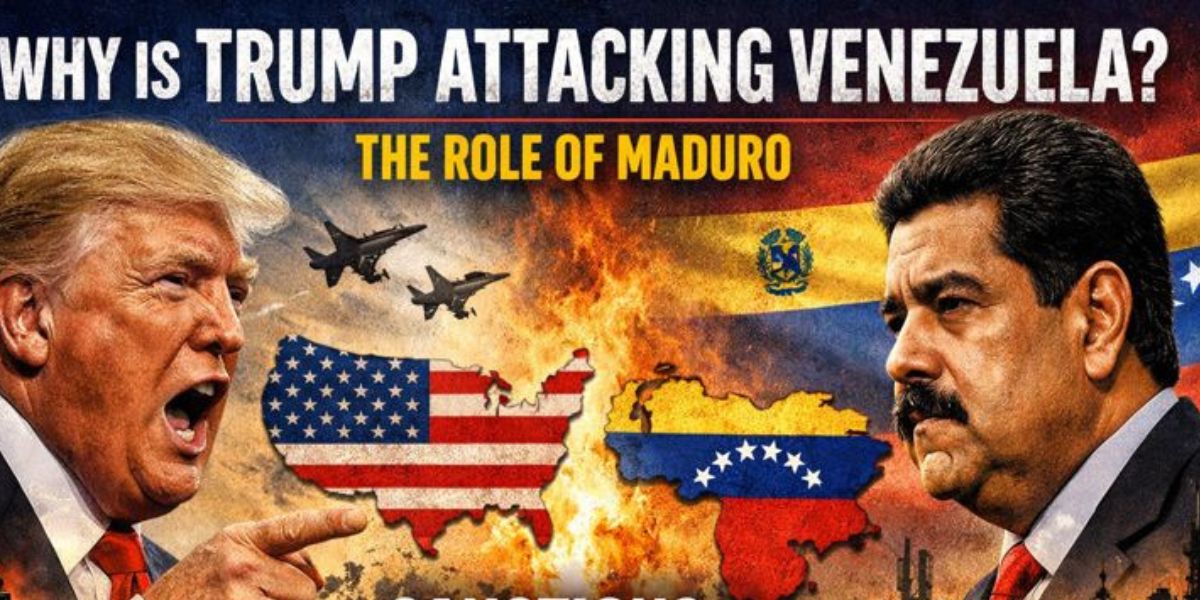
It’s a complicated situation down in Venezuela, and President Trump has been pretty vocal about his stance. You hear a lot about why the U.S. is involved, but what’s really going on? This article breaks down the reasons behind the U.S. actions, focusing on the role of Nicolás Maduro and the political and economic factors at play. We’ll look at the history, the accusations, and what it all means, as well as why is Trump attacking Venezuela.
It’s a complicated story, but basically, President Trump has made Venezuela a big target. He’s been pretty vocal about his dislike for President Nicolás Maduro and his government. This isn’t just about one leader, though; it’s tied up in a whole mess of political and economic issues that have been brewing for years.
Trump’s administration has pointed fingers at Maduro for a bunch of things. They say he’s responsible for the huge number of Venezuelan migrants showing up in the U.S., claiming Maduro is even emptying prisons to send people over. Plus, there’s the whole drug issue – the U.S. government has accused Maduro’s government of being involved in drug trafficking, even calling some groups linked to it terrorist organizations. Maduro, on the other hand, says the U.S. is just using the drug war as an excuse to try and take over Venezuela and get its hands on its oil.
Here’s a quick look at some of the main points of contention:
The situation is really a tangled web of accusations, economic problems, and political power plays. It’s not a simple case of one side being right and the other wrong; there are layers to it that make it hard to sort out.
It’s a situation that’s had ripple effects, not just within Venezuela but across the region and even back home in the U.S. The U.S. has ramped up pressure through various means, including sanctions and even military threats, all aimed at pushing Maduro out and changing the course of Venezuela’s future.
Things between the U.S. and Venezuela weren’t exactly cozy before President Trump even stepped into the Oval Office. We’re talking about a relationship that’s been pretty rocky for a while now, especially throughout the 21st century. It wasn’t just a sudden thing that popped up; there were years of building tension and disagreements.
Back then, the U.S. was already pretty concerned about what was happening in Venezuela. Think about:
The U.S. had a long history of engaging with Venezuela, sometimes through cooperation and other times through criticism, depending on the political leadership in both countries and the specific issues at hand.
So, when Trump came into office, he wasn’t starting from scratch. He inherited a situation that was already complicated, with a history of diplomatic relations between the United States and Venezuela that had seen better days. It was a complex web of past policies, economic interests, and political viewpoints that set the stage for whatever came next. Diplomatic relations were already strained.
Why is Trump attacking Venezuela?President Trump has made it pretty clear he sees Maduro’s government as a major problem for the United States. A big part of it seems to be about controlling the flow of drugs into the U.S. Trump has pointed fingers directly at Maduro, even accusing him of leading a group called Cartel de los Soles, which the U.S. has labeled a terrorist organization. The idea is that Maduro’s administration is either actively involved in or turning a blind eye to drug trafficking, with tons of cocaine and fentanyl making their way north.
Beyond the drug angle, there’s the massive migration issue. Trump has blamed Maduro for the economic collapse and repression that have forced millions of Venezuelans to flee their country. He’s even made some pretty strong claims, suggesting Maduro emptied prisons and sent inmates to the U.S. It’s a complex situation, and the U.S. has definitely ramped up pressure, including military actions and sanctions on oil tankers.
Here’s a quick look at some of the key accusations:
The administration’s stance is that Maduro’s government is a destabilizing force, not just for Venezuela but for the entire region, and that direct action is necessary to address these issues.
It’s not just about Maduro himself, but also about the broader implications for U.S. interests and security. The administration has also talked about wanting a “proper transition” in Venezuela, suggesting they want to see a change in leadership and governance.
So, who exactly is Nicolás Maduro, the guy at the center of all this? He’s been Venezuela’s president since 2013, taking over after Hugo Chávez. Maduro’s political journey started after Chávez came to power, and he’s been leading the country through some seriously rough times. The U.S. government, especially under President Trump, has really zeroed in on him.
Trump’s opposition to Maduro stems from a mix of accusations, including alleged drug trafficking, human rights abuses, and mismanagement that has led to a massive exodus of Venezuelans. The Trump administration has pointed fingers at Maduro for supposedly emptying prisons and sending inmates north, and has also focused heavily on the flow of drugs like fentanyl and cocaine into the U.S., even designating groups like Cartel de los Soles as terrorist organizations, which they claim Maduro leads.
Here’s a quick look at some key points regarding Maduro’s leadership and the U.S. stance:
The U.S. has made it clear that it views Maduro’s government as illegitimate and a source of regional instability. This strong stance is a major driver behind the escalated pressure.
The United States has really turned up the heat on Venezuela, especially in the last couple of years. It’s not just one thing; it’s a whole mix of actions aimed at squeezing the Maduro government.
First off, there’s been a big increase in military presence and operations in the region. Think more ships, more troops, and more targeted actions. The US has been going after vessels it claims are involved in drug trafficking, with multiple strikes happening in the Caribbean and Pacific. They’ve even gone as far as to seize oil tankers, arguing they’re carrying sanctioned oil. This has led to some serious accusations from Venezuela, calling these actions ‘international piracy’.
Beyond the military moves, there’s been a significant financial squeeze. The US has put a “total naval blockade” on oil tankers going in and out of Venezuela, which is a huge deal since oil is pretty much the country’s main source of income. They’ve also been offering bigger rewards for information leading to Maduro’s capture, showing they’re serious about removing him from power.
Here’s a quick look at some of the actions:
The strategy seems to be a multi-pronged approach, combining military posturing, economic pressure, and intelligence gathering, all designed to isolate and weaken the Maduro regime. It’s a pretty aggressive stance, and it’s definitely changed the dynamic between the two countries.
On January 3, 2026, the United States initiated a special operation to extract Venezuelan President Nicolás Maduro and his wife from Caracas, marking a significant escalation in these efforts. The administration has stated its intention to “run” the country until a stable transition can occur, though the exact long-term plan remains a subject of discussion. Extracting Maduro
The political and economic system in Venezuela, often described as “21st-century socialism,” has been a major point of contention for the Trump administration. Critics, including President Trump himself, frequently point to the socialist policies implemented by Hugo Chávez and continued under Nicolás Maduro as the root cause of the country’s severe economic problems and political instability. This perspective frames the U.S. actions as an effort to counter a failed ideology that has impoverished its people and threatened regional stability.
The Trump administration has consistently linked Venezuela’s socialist model to its collapse.
Here’s a breakdown of the arguments often made:
The narrative presented by the Trump administration often paints Venezuela’s socialist experiment as a cautionary tale. It’s a story where good intentions, or perhaps something else entirely, devolved into economic ruin and political repression, justifying external intervention to correct the course.
This ideological clash is a significant factor in understanding the U.S. stance. It’s not just about oil or specific political figures; it’s about a fundamental disagreement over economic and political systems. The administration’s policy towards Venezuela is, in part, an attempt to push back against what it sees as the negative consequences of socialism, aiming to reclaim U.S. oil interests and promote a different model for the region.
When we talk about why President Trump took such a hard line against Venezuela, you can’t ignore the reports about human rights. It’s a pretty grim picture that’s been painted.
There have been a lot of accusations thrown around about how people are treated within Venezuela under Nicolás Maduro’s government. Things like
These kinds of issues are serious business, and they definitely caught the attention of the U.S. administration. The Trump administration frequently pointed to these alleged abuses as a major reason for its strong stance. It’s not just about politics or economics; it’s about how people are being treated on the ground.
Of course, these are serious allegations, and they’ve been a big part of the international conversation surrounding Venezuela. The U.S. government has often cited these concerns when explaining its actions, including the sanctions and other pressures applied to Maduro’s government. It’s a complex situation, but the human rights aspect is definitely a key piece of the puzzle.
The situation has been described by various international bodies and human rights organizations as deeply concerning, with widespread reports of abuses that violate international norms and standards for the treatment of citizens.
It’s also worth noting that Venezuelan President Nicolás Maduro and his wife have reportedly faced federal charges in the U.S. related to alleged drug trafficking and ties to certain groups, which adds another layer to the accusations. This adds to the overall picture of why the U.S. has been so focused on the leadership in Venezuela.
It’s a question that’s been tossed around a lot, especially when talking about why the US has been so focused on Venezuela lately. The official line from the Trump administration often paints Venezuela as a major source of drugs, particularly fentanyl and cocaine, making their way to American streets. They’ve pointed to naval operations and strikes on vessels, claiming these actions are stopping a flood of dangerous substances.
But when you dig a little deeper, the picture gets a bit more complicated. Most experts who study drug trafficking don’t see Venezuela as a primary producer or a major hub for getting drugs into the US. Think of it this way: Colombia is the big player when it comes to growing coca, the plant used to make cocaine. Most of that cocaine, according to reports from agencies like the DEA, heads to the US through other routes, like the Pacific or overland from Mexico. Venezuela, in this scenario, is more of a transit point for drugs made elsewhere.
And then there’s fentanyl. This synthetic opioid is a huge problem in the US, causing a lot of overdose deaths. But the fentanyl is reaching the US? It’s mostly made in Mexico and crosses the southern border. Venezuela just isn’t really on the map as a source country for it, according to official US assessments.
So, while the administration talks about stopping drugs, the actual role Venezuela plays in the US drug trade seems to be much smaller than what’s sometimes suggested.
The narrative about Venezuela being a major drug source for the US doesn’t quite line up with what many drug experts and official reports suggest. It seems more like a stopover point than the origin.
It’s also worth noting that claims about specific gangs, like Tren de Aragua, being sent by the Venezuelan government to the US haven’t been backed up with solid evidence. Reports from intelligence agencies suggest the regime probably isn’t directing these groups to operate in the US, even if the country’s instability allows them to function.
It’s a question a lot of people are asking, right? Is all this fuss about Venezuela really about making things right, or is it just about the oil? President Trump has certainly talked a lot about oil, mentioning how U.S. companies could come in and fix the infrastructure. He even said Venezuela owes the U.S. oil rights.
But then you hear other arguments. Some folks say that invading a country just to grab its oil isn’t exactly legal or ethical. Plus, the world already has plenty of oil, so why the big rush to get more from Venezuela? It seems like there are easier ways to get oil if that was the main goal.
Here’s a quick look at the oil situation:
The idea of the U.S. swooping in to take Venezuela’s oil sounds like something out of a movie, but the reality is way more complicated. International laws generally say you can’t just take private property, even after a conflict. And when you look at the global oil market, it’s not like there’s a shortage driving this.
Then there’s the “justice” angle. The administration has pointed to human rights issues and the government’s actions under Nicolás Maduro. So, is it a mix of both? Maybe. It’s hard to say for sure what the primary driver is, but the oil connection is definitely a big part of the conversation. The U.S. has made moves against Venezuela, stating it was to protect Americans from narco-trafficking and to get Maduro President Trump announced a US operation against Venezuela. It’s a complex situation with a lot of different interests at play.
It’s hard to talk about why the U.S. under Trump got so involved with Venezuela without mentioning the absolute mess the country’s economy was in. We’re talking about a situation that went from bad to worse, really fast. People were struggling to find basic stuff like food and medicine, and millions ended up leaving the country.
The economic freefall in Venezuela created a humanitarian crisis that couldn’t be ignored.
Here’s a quick look at some of the problems:
This economic breakdown wasn’t just numbers on a page; it meant real people suffering. The government under Maduro was blamed for a lot of it, with accusations of mismanagement and corruption. It created a lot of instability, not just within Venezuela but in the whole region.
So, when you look at the U.S. actions, especially under Trump, you can see how this economic collapse played a big part. It wasn’t just about politics; it was about a country falling apart and the ripple effects that had.
So, why all the economic pressure on Venezuela? The Trump administration really ramped things up with sanctions and trade restrictions, aiming to cripple the government’s ability to operate and, frankly, to make life difficult for Maduro’s regime. It’s a pretty aggressive approach, no doubt about it.
These measures weren’t just random; they were designed to hit Venezuela where it hurts – its economy, especially its oil sector. The idea was to cut off funding for Maduro’s government and push for a change. Think of it like trying to turn off the tap on their revenue streams.
Here’s a breakdown of some key tactics used:
It wasn’t just about hurting the economy, though. The administration also framed these actions as necessary to combat corruption and support the Venezuelan people, though critics often questioned the real-world impact on ordinary citizens.
The economic warfare waged through sanctions and trade bans was a central pillar of the Trump administration’s strategy. It was intended to starve the government of resources and force a political transition, but the humanitarian consequences were a major point of contention.
These economic tools were seen as a way to apply immense pressure without direct military intervention, though the line between pressure and punishment often blurred. It’s a complex situation with a lot of moving parts, and the economic impact is something people are still talking about.
Okay, so let’s talk about oil. Venezuela has, like, a ridiculous amount of it – more than almost anywhere else on Earth. And when President Trump started talking about Venezuela, oil was a big part of the conversation. He even said things like, “We’re going to have our very large United States oil companies—the biggest anywhere in the world—go in, spend billions of dollars, fix the badly broken infrastructure, the oil infrastructure.” Some people heard that and immediately thought, It sounds like the U.S. might be after Venezuela’s oil, right?
But here’s the thing: it’s not that simple. The oil industry there is a total mess. The main oil company, PDVSA, used to be pretty solid, but it’s been downhill for years. Think mismanagement, lack of investment, and a big employee shake-up back in the early 2000s. Production has dropped way down from what it used to be.
Restoring it would take a ton of money and a lot of time. Plus, the kind of oil Venezuela has is heavy and harder to process, which means it doesn’t fetch as high a price. And honestly, the global oil market is already pretty full, with prices kind of dropping. Big investments like this usually need a stable political situation, and well, that’s not exactly happening in Venezuela right now.
The idea that the U.S. could just swoop in, fix everything, and start making a fortune from Venezuelan oil quickly just doesn’t line up with reality. It’s a lot more complicated than just showing up with big oil companies.
So, while oil is definitely a factor, it’s probably not the whole story. It’s more like a complicated piece of a much bigger puzzle. The U.S. has other, easier ways to get oil, and the market isn’t exactly begging for more right now. It makes you wonder what the real game plan is.
It’s pretty clear that the folks pushing back against Nicolás Maduro in Venezuela had a big part to play in how the Trump administration decided to handle things. You had leaders and groups within Venezuela, often living in exile or working underground, who were constantly trying to get the U.S. government, and specifically the Trump White House, to take a harder line.
These opposition figures weren’t just passively hoping for change; they were actively lobbying, meeting with U.S. officials, and sharing their perspectives on the situation. They painted a picture of a government that was corrupt, oppressive, and failing its people. Their consistent message was that Maduro’s regime needed to go, and that the U.S. had a role to play in making that happen.
Think about it like this:
Of course, it wasn’t always a simple, unified front. There were different factions within the Venezuelan opposition, each with its own ideas and priorities. But overall, their persistent efforts definitely put pressure on the U.S. to act, and their viewpoints were a significant factor in the decisions made.
The constant drumbeat from the Venezuelan opposition, both within the country and abroad, played a significant role in shaping the U.S. response. They offered a narrative that resonated with certain political factions in Washington, emphasizing the urgency of removing Maduro and the need for external support to achieve that goal. This advocacy helped to solidify the administration’s resolve to pursue a policy of maximum pressure.
It’s hard to say exactly how much weight their influence carried compared to other factors, like U.S. domestic politics or broader geopolitical considerations. But it’s undeniable that the voices of those opposing Maduro were a key ingredient in the recipe for Trump’s Venezuela policy.
So, why all the strong-arm tactics against Venezuela instead of just talking it out? It seems like diplomacy wasn’t cutting it for the Trump administration. They felt like they needed to go bigger, to really make a point.
A few big ideas were floating around about why this was the chosen path:
The Trump administration seemed to view Venezuela as a situation that needed more than just a gentle nudge.
The approach taken suggests a belief that the Venezuelan government under Maduro was unresponsive to standard diplomatic overtures, necessitating a more forceful strategy to achieve desired outcomes, whether that was regime change, addressing humanitarian concerns, or other objectives. This often involves a mix of economic pressure and public condemnation.
They really seemed to think that a show of force, or at least very strong economic measures, was the only way to get Maduro’s attention and push for the changes they wanted to see. It wasn’t just about talking; it was about acting in a way they thought would force a different outcome.
So, did President Trump actually plan to send troops into Venezuela? It’s a question a lot of people were asking, especially with all the tough talk coming from the White House. While sanctions and diplomatic pressure were the main tools used for a long time, there were definitely moments when it felt like things could escalate much further.
The administration made several veiled threats and conducted military-style operations that kept everyone guessing. For instance, there were reports of increased naval presence in the region and even some rather aggressive actions against suspected drug smuggling vessels. These weren’t just random acts; they seemed designed to send a very clear message to Nicolás Maduro and his government.
It’s not like this kind of thing hasn’t happened before in Latin America, you know? The U.S. has a history of intervening in the region, sometimes directly, sometimes less so. Think about Panama back in the day – they went in and grabbed Manuel Noriega. So, the idea of a military move wasn’t entirely out of left field.
Here’s a look at some of the actions that fueled speculation:
The situation was complex, with different advisors seemingly pushing for different outcomes. This lack of a unified post-intervention plan, if one were to occur, made any potential military action even more uncertain.
Ultimately, while there were significant military posturing and actions that skirted the line, a full-scale invasion didn’t happen. The focus remained on economic pressure and other forms of isolation. However, the possibility of military intervention was certainly a talking point and a source of anxiety for many observers.
Many people ask why is Trump attacking Venezuela? And when the Trump administration took action against Venezuela and captured its leader, Nicolás Maduro, the world definitely took notice. Reactions were all over the place, honestly. Some countries were pretty quiet, maybe not wanting to get involved in a dispute with the U.S. Others, though, were quick to voice their opinions, and not always in a good way.
It’s kind of like when something big happens in your neighborhood – some people will talk about it non-stop, others will just pretend they didn’t see anything. The situation in Venezuela was no different on the global stage.
Here’s a quick look at some of the general responses:
The U.S. move definitely stirred the pot internationally. It raised questions about how countries interact and what the limits are when it comes to foreign policy interventions. It wasn’t just a simple event; it had ripples everywhere.
It’s interesting because, in situations like this, you see how different countries prioritize things. Some focus on international law and order, while others might be more concerned with regional stability or their own economic ties. The apprehension of Nicolás Maduro by the Trump administration was a major event that sparked a range of opinions across different nations. It really highlighted the ongoing debates about U.S. influence and intervention in Latin America.
And then there’s the whole aspect of international institutions. While some groups might want to step in, the U.S. has a lot of power, especially in places like the UN Security Council, which can make it hard for any real action to be taken against its policies. It’s a tough system to navigate when you’re talking about global power dynamics.
So, what’s the fallout from all this Trump-Venezuela drama? Andwhy is Trump attacking Venezuela?It’s a mixed bag, honestly, and not just for Venezuela itself. Across Latin America, things got pretty tense. Some countries were already on edge, and this whole situation just added to the regional instability. You had leaders looking at what the U.S. was doing and wondering if they were next, or if it meant a shift back to older, more interventionist policies. It definitely made some governments nervous about their own sovereignty.
The ripple effects in the U.S. are also worth noting, touching on everything from migration patterns to economic considerations.
Here’s a quick look at some of the broader impacts:
The whole situation became a really complicated knot, with actions taken in one place causing unexpected problems somewhere else. It wasn’t just a simple case of one country dictating terms; it was a messy, interconnected web of political, economic, and social consequences that played out across borders.
And then there’s the domestic side. You saw debates heating up about foreign policy, the role of the U.S. in the world, and even how it affected political discussions within the United States. It wasn’t just an international issue; it became part of the conversation back home, influencing how people viewed the administration’s foreign policy decisions and their effectiveness.
So, why is Trump attacking Venezuela? It’s a question a lot of people have been asking, and honestly, it’s complicated. We’ve seen a lot of back-and-forth, with the U.S. ramping up pressure on the Maduro government. It feels like a real escalation, and it’s hard to ignore.
Here’s a quick rundown of what’s been going on:
The situation is pretty tense, and it’s not just about politics. There are real human consequences for the people in Venezuela, with many fleeing the country due to the ongoing crisis.
What happens next? That’s the million-dollar question, isn’t it? It’s hard to say for sure. Will diplomacy win out? Will the pressure continue? The path forward seems uncertain, with potential for further instability. It’s a situation that’s constantly evolving, and everyone’s watching to see how it all plays out. The reasons why Trump is attacking Venezuela are multifaceted, touching on everything from alleged drug trafficking to political ideology and economic interests.
Wondering why Donald Trump is targeting Venezuela and what might happen next? It’s a complex situation with many moving parts. To get a clearer picture and stay updated on the latest developments, visit our website for in-depth analysis. We break down the key issues so you can understand them.
President Trump targeted Venezuela mainly because he blamed its leader, Nicolás Maduro, for many Venezuelans leaving their country. He also claimed Venezuela was sending drugs and criminals to the U.S. and wanted to stop that.
Nicolás Maduro is the leader of Venezuela. He took over after Hugo Chávez and has been in power since 2013. The U.S. government accused him of running a corrupt government and being involved in drug trafficking.
Before Maduro was captured, the U.S. increased pressure by offering a large reward for information leading to his capture. They also started attacking ships they believed were carrying drugs to the U.S. and put economic limits on Venezuela.
Yes, U.S. forces conducted military actions in Venezuela, including strikes on ships and later, a ground operation that led to the capture of President Nicolás Maduro and his wife. President Trump called this ‘Operation Absolute Resolve’.
Nicolás Maduro and his associates face charges related to drug trafficking. The U.S. indictment alleges a system of corruption involving Venezuelan officials and drug cartels that sent cocaine to the United States.
After capturing Maduro, President Trump stated that the U.S. would ‘run’ Venezuela. He said this would continue until a safe and proper transition of power could happen, and Venezuela’s oil infrastructure could be rebuilt.
President Trump accused Venezuela of sending drugs, like fentanyl and cocaine, to the U.S. He also named two Venezuelan groups, Tren de Aragua and Cartel de los Soles, as terrorist organizations, alleging Maduro was involved with the latter.
Venezuela has been facing a severe economic crisis. This has caused millions of people to leave the country seeking better conditions. The U.S. blamed Maduro’s government for this collapse.
Yes, the U.S. used sanctions and trade restrictions against Venezuela. One significant action was a naval blockade on oil tankers, as oil is Venezuela’s main source of income.
Venezuela has vast oil reserves, and control over its oil industry was a significant factor. Trump suggested that U.S. oil companies would invest in Venezuela after Maduro was removed, potentially benefiting the U.S.
Many international officials, foreign leaders, and legal experts believe the U.S. strikes and capture of Maduro violated international law. However, the U.S., with its veto power in the UN Security Council, is difficult to hold accountable through international institutions.
The ‘Don-roe Doctrine’ is a term used to describe President Trump’s approach to Latin America, which seemed to revive the old Monroe Doctrine. It suggested the U.S. would use its power to ensure its interests, including access to resources like oil, in the region.


